
By Jay Fedak, CFP® | Fee-Only Financial Planner, New Milford, CT
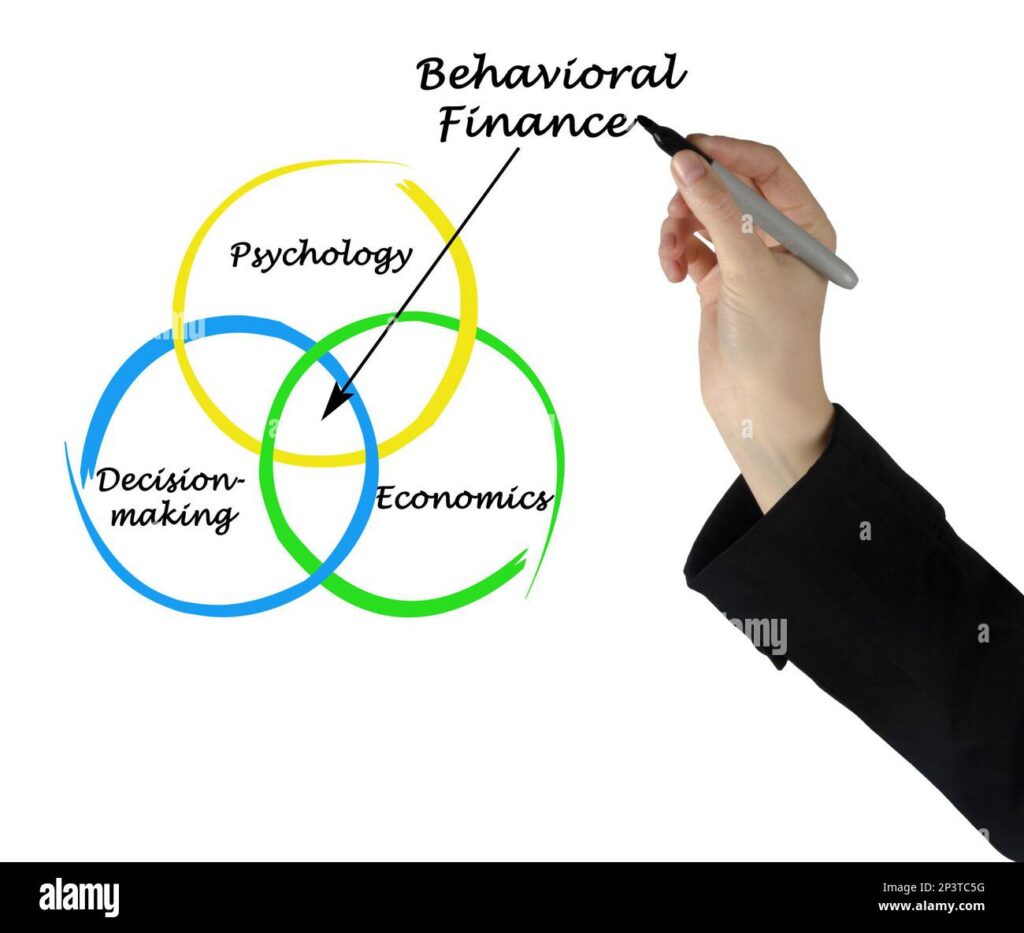
It all started with a paper on a topic called “Prospect Theory” in 1979. Unbeknownst to the two cognitive psychologists, Daniel Kahneman and Amos Tversky, who began collaborating in 1969 they would become the founders of behavioral finance. They were just trying to measure and understand human behavior. Certainly, without finance or investment in mind.
They first published a paper in 1974 on heuristics and biases which directly challenged the assumptions that humans acted rationally in most circumstances. They found a number of factors could further sway levels of rational thinking, specifically something they called “loss aversion”: the fact that humans feel significantly more pain from losing than pleasure from winning. This has become widely accepted and was the basis for their follow-up work on what they called “Prospect Theory”.
In study after study, they and others were able to reproduce similar findings. When presented with an opportunity to win or lose money, people rated the pain of losing twice as bad as the joy from winning. This concept took quite a while to take hold in the world of investment and finance as it was a strongly held notion that people behaved rationally.
Fast forward a few years we meet one of Kahneman and Tversky’s disciples, Richard Thaler. He is an academic for sure, but more of the pragmatic variety. Richard focused on solvable behavioral and financial problems studying the responses of his subjects to many different economic and financial situations to better understand human behavior. He began furthering their work and applying it mainly to the field of finance. In combining his work on status quo bias, inertia/friction, and mental accounting he produced perhaps the single most important contribution to modern day retirement plan savings: the 401k automatic enrollment system.
For years employees were offered the opportunity to contribute to a retirement plan, for which they could contribute a pre-tax portion of their salary directly to a retirement account while also receiving a free “match” of a portion of their contribution from their employer. While analyzing this opportunity Congress created back in 1978, and widely adopted by corporations during the 1980s, it was clear this was not only a good opportunity for US workers, but an even better opportunity for many companies to shift the retirement funding risk from employer to employee.
Many pension systems were becoming unsustainable to corporate America. This seemed to be an excellent solution, but why couldn’t they get enrollment numbers up from roughly 50%? He found it was primarily because it took effort to opt in to these programs. Usually only a few minutes, but that seemed to provide enough friction that many decided to forego the enrollment, and retirement funding in the process.
So, what next? A simple solution that took a bit of regulatory work but was born from this research. Tell people if they do nothing, they are enrolled. To opt-out, they would have to do something. Genius! Overcoming the default by telling folks they actually have to do something in order not to save for their retirement. How ironic!
So here we are years later and companies with auto-enroll have routinely a 90% plus enrollment rate. This speaks to humans as a whole. Why is it we don’t do what’s good for us, even if it does take a little effort? For an answer to that, take a look at our behavior around physical fitness. Enough said!
Retirement preparation (or lack thereof) numbers are staggering as reported by the Federal Reserve Survey of Consumer Finances 2023, as cited by Kiplinger and SavvyWealth. Here we take a look at average and median savings of folks through their decades:
Ages 35-44
-
- Average: $141,520 | Median: $45,000
-
- Fidelity benchmark: should have 3x salary
Ages 45-54
-
- Average: $313,220 | Median: $115,000
-
- Fidelity benchmark: should have 6x salary
Ages 55-64
-
- Average: $537,560 | Median: $185,000
-
- Fidelity benchmark: should have 8x salary
Ages 65-74
-
- Average: $609,230 | Median: $200,000
-
- Americans believe they need $1.26 million to retire comfortably
Now pay close attention and remember what average and median are. They are very different in what they represent. A bunch of strong earners and savers will very much skew the averages, so most of the time it is best to focus on the median which is the exact middle of all those surveyed. Half of the population who participated in the survey ages 35-74 have less than $200k saved. But read the last sentence: Americans believe they need $1.26 million or more to retire comfortably. You read that right. Now think about how very different the reality is and ask yourself which side of the median you want to be on? The highest of the averages saved is only half of what most said they would need to retire comfortably.
So, the question is: what are you waiting for? Find out if you are in the sweet spot, or if not what we can do to help get you there. Contact me for a free discussion, and if you want to move forward, I’m sure we can analyze your numbers and find a way to improve your situation!
Fedak Financial Planning | Fiduciary Financial Advisor New Milford, CT